Why quilt patterns often mirror architectural styles of their time
Long before digital pattern downloads, a pieced quilt brought architectural order into the home. Repeated blocks, framed borders, stepped rooflines and window-like openings could echo the rooms and façades their makers knew.
A quilt is not a blueprint for a particular house, and the resemblance can be indirect. Pattern books, domestic interiors, gardens and shared craft traditions supplied motifs that makers adapted. The result is a textile record of taste: architectural ideas rendered in fabric, thread and colour.
Houses translated into geometry
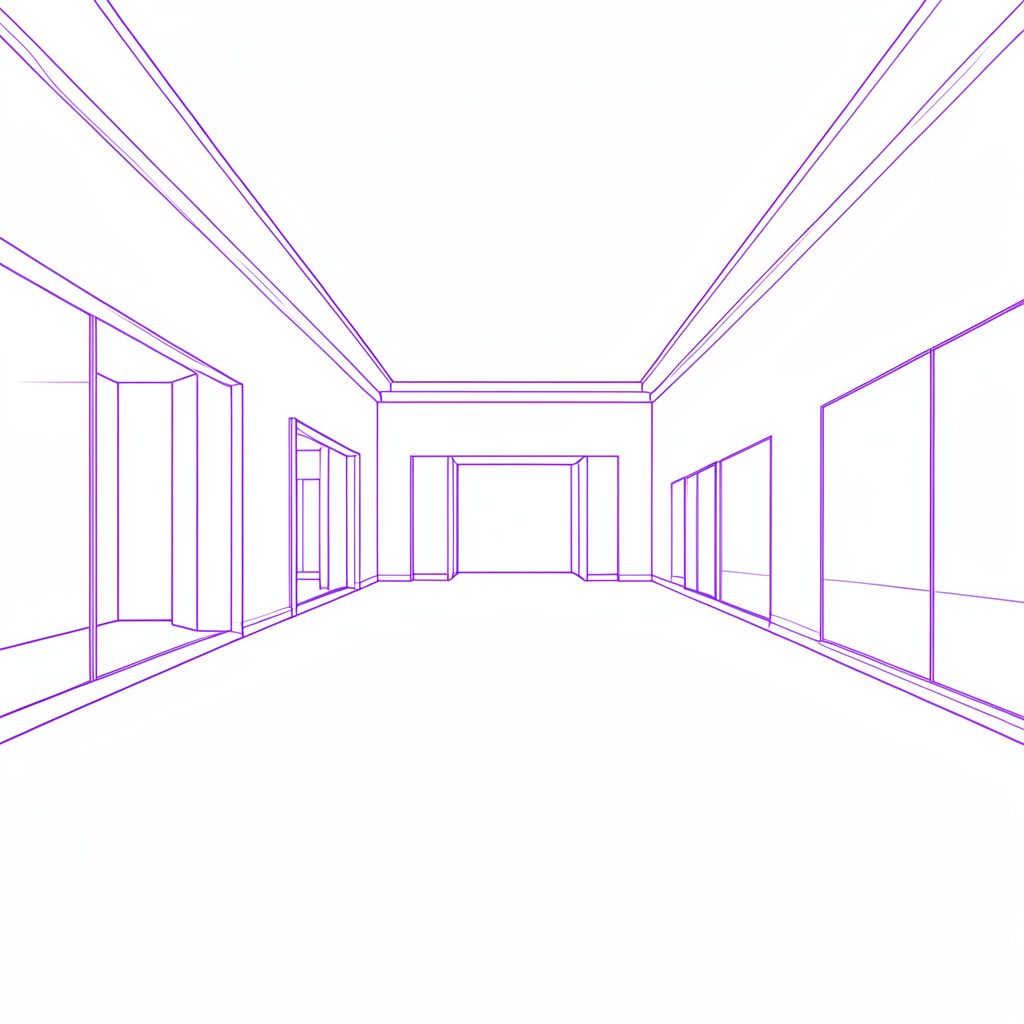
Architecture and patchwork share a visual language of module, symmetry, repetition and framing. A central medallion can occupy the position of a front door; a narrow border resembles a cornice; a sequence of blocks reads like windows along a street. Even quilting stitches may suggest brickwork, carved plaster or repeated roof tiles.
The connection appears in familiar block names and shapes. “Log Cabin” resembles timber framing, “Courthouse Steps” turns stairs into a rising sequence, and “Sash Window” places crossed fabric in a rectangular frame. These labels do not prove that one building inspired one quilt. They show how makers translated the built environment into an easily handled grid of fabric pieces.
Windows, doors and repeating façades
A sash window is a particularly strong model for patchwork because it can be reduced to rectangles within a rectangle. A nine-patch or patchwork square likewise suggests a tiled wall or a gridded façade. In brick-wall quilting, joined fabric pieces imitate courses of masonry, carrying the effect of a solid exterior into a soft surface.
Triangles create roofs, gables and pediments, while squares and rectangles become doors, halls and openings. A border can function visually as a verandah edge, garden path or room plan. The vocabulary is broad enough to join architecture with landscape, allowing a quilt to suggest both the house and the ordered grounds around it.
Ornament around the edge
Historic houses rarely rely on shape alone. Victorian and Federation-era buildings brought bays, finials, pediments, floral plasterwork and cast-iron lace into view. Corresponding appliqué sprays, fans, shells, feathers and Greek-key borders appeared on clothing, furnishings and wholecloth quilts. An ornate border can play the part of decorative trim, turning the centre of a quilt into a façade.
Australia’s climate added another layer. Broad verandahs, high ceilings and lightweight screens suited the country’s heat, while colourful textiles softened hard floors, brick chimneys and stone walls. A maker did not need to copy a house exactly: rhythmic fretwork, repeated posts and alternating light and shade could become the logic of patchwork.
Pattern books and the local making trade
Nineteenth- and twentieth-century makers in Australia encountered an international flow of pattern books, magazines and needlework instructions. European classical ornament, British sampler designs and American quilt blocks crossed oceans through print and migration. Local makers kept what suited their materials and homes, sometimes changing scale, motif or colour rather than following a diagram exactly.
Their working life shaped the result. Dressmaking offcuts were pieced into small blocks, while Australian wool and locally available cotton supported robust bedcovers. Everyday practice still gathers in church halls, Country Women’s Association rooms, community craft rooms and op shops. Contemporary quilts appear at local shows, makers’ markets and online shops, where the emphasis has shifted from household utility to artistic authorship and collectability.
What Australian streets contributed
Sydney’s sandstone terraces and Federation cottages offered narrow elevations, repeated doors and fine ironwork; Melbourne’s bluestone terraces and polychrome brick fronts supplied another vocabulary of bays, stripes and ornament. Adelaide’s sandstone cottages and deep-verandah villas, together with Queensland’s sprawling high-set houses, made shade, airflow and outdoor rooms central features of domestic design.
These varied forms fed a broader Australian pattern language. Symmetry suited the formal front rooms of grand houses, while adaptable borders and pieced units could suit smaller suburban dwellings. Cottages, workers’ homes and flats all encouraged inventive use of limited fabric. A quilt’s block scale and dense surface decoration could therefore reflect prestige alongside economy, climate and the practical architecture of ordinary life.
Reading a quilt beside a building
A careful comparison begins with visual evidence rather than an assumed story. A first look at the pattern can reveal three useful clues:
- A central medallion may suggest a symmetrical entrance or formal room axis.
- Repeated blocks can resemble windows, tiles or structural bays.
- Stepped triangles often read as stairs, gables or rooflines.
A second look at architectural details adds another set of comparisons:
- Fan and shell forms echo fanlights, pediments and carved ornament.
- Narrow borders resemble cornices, verandah edges or garden paths.
- Fretwork and angular repeats recall cast-iron lace and timber screens.
Context supplies the missing link. Pattern-book dates, printed selvages, fabric widths, papers, inscriptions and the maker’s locality can show whether an architectural resemblance was direct, adapted or simply coincidental.
Preserve, compare and keep making
Legal and heritage frameworks matter here. Under Australia’s Copyright Act 1968, a published pattern, drawing or photograph may be protected, while a general geometric idea usually is not. Most textile products sold in Australia must also carry the care, fibre-content and, where required, country-of-origin information required by Australian consumer law. State and local heritage schemes can safeguard the exterior of a significant building without protecting the curtains, bedcovers or pattern papers once inside it.
Visit the Southeastern Quilt Museum, explore its exhibitions and digital archive, and compare a quilt’s structure with the architecture of your own street. Support local quilt guilds and museum collections, document provenance with care, and follow textile care guidance so that these patterned records of domestic history remain available to the next generation of viewers.